Korean Street Food at Pojangmacha: Spicy, Sweet, and Cheap
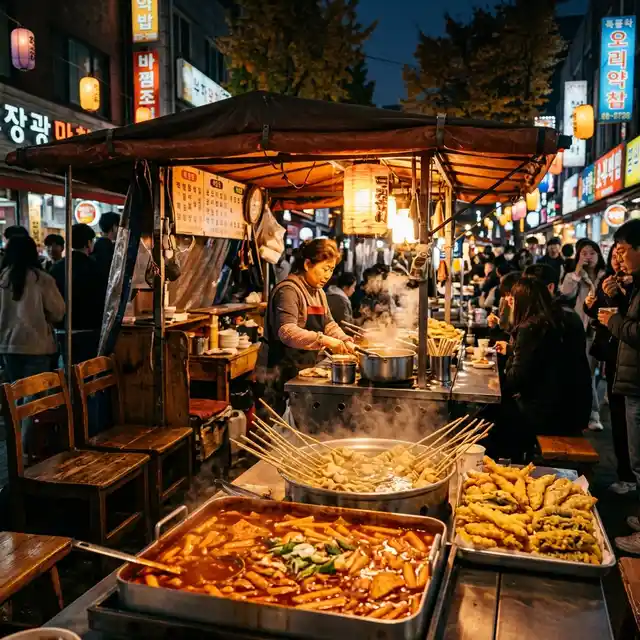
Walking into a Korean traditional market, the first thing that reaches you is the smell. The sharp, spicy scent of gochujang sauce bubbling in a wide pot. The savory warmth of eomuk broth. The sweetness of hotteok sizzling in oil. I grew up following my parents through weekend market visits, and I can honestly say I have never once walked past a pojangmacha stall without stopping. Even now, on the drive down to visit my parents in the countryside, I end up standing in front of a tteokbokki pot in whatever town market I happen to pass through. Today I want to walk through the staples of Korean street food as they actually exist, with honest impressions from someone who has eaten them for decades.
Tteokbokki: The Gold Standard of Spicy-Sweet
- A gochujang and gochugaru sauce coating chewy rice cakes, balanced with a distinct sweetness
- Priced at roughly 3,000 to 6,000 won per serving depending on the market and location
- Typically served alongside fish cake skewers and boiled eggs as a set
Tteokbokki from a street stall or traditional market is meaningfully different from what you get at chain restaurants. The sauce tends to be thicker, reduced longer, and the rice cakes themselves have absorbed more of the flavor through slow simmering. Some vendors cook in a wide iron pan right in front of you — watching it bubble and reduce, the smell alone is enough to make your mouth water.
One honest warning: Korean market tteokbokki is spicier than people expect. Even locals who are not heat-sensitive occasionally end up sweating. Most stalls now offer a choice of spice levels — hot, medium, or mild — so it is worth asking before they dish it up.
Sundae and Eomuk: The Pojangmacha Pair
- Sundae is steamed pork intestine stuffed with glass noodles and vegetables, eaten with salt or salted shrimp paste
- Fish cake (eomuk) skewers cost between 500 and 1,500 won; the broth served alongside is typically free
- The warmth of eomuk broth on a cold market day is the kind of thing you have to experience to understand
Order tteokbokki at a pojangmacha and there will almost certainly be eomuk skewers standing in a metal tray nearby. The broth they are simmered in — usually made with dried kelp, radish, and dried shrimp — is cleaner and deeper than it looks. Most vendors pour it into a small cup at no charge. Drinking it while walking through a winter market is one of those small Korean habits that leaves an impression.
Sundae can look unfamiliar to visitors who have not encountered it. The appearance is closer to blood sausage than anything common in Western food, but the actual texture is mild and not particularly heavy. It is sliced and served with a pinch of salt or a small bowl of salted shrimp paste for dipping. Priced at around 4,000 to 7,000 won for a portion, it is one of the more filling options in a market food alley.
One combination that locals rarely skip is sundae with makgeolli, the milky Korean rice wine. You will find them sold side by side at stalls across traditional markets, and the pairing works better than it sounds on paper. When you are hungry and wandering through a market, that combination is hard to walk past.
Twigim: The Pull of Frying Oil
- Battered vegetables, sweet potato, squid, and more fried fresh to order
- Priced at roughly 500 to 1,500 won per piece; texture degrades quickly after frying
- Dipping twigim into tteokbokki sauce is considered the standard local eating method
A twigim stall is impossible to walk past quickly. The sound of batter hitting hot oil and the smell of fresh frying reach you before you see the stall. Sweet potato, mixed vegetables, squid rings, and peppers are among the most common options. The key is eating them immediately — even five minutes of sitting changes the texture significantly.
The combination Koreans refer to as "tteok-twi-sun" (tteokbokki, twigim, sundae served together) is the unofficial full set of Korean market street food. Two people can order this combination with drinks and rarely spend more than ten thousand won. Dipping the fried pieces into the tteokbokki sauce transforms both — the spicy sauce softens the oil, and the crispy batter absorbs the flavor in a way that is hard to describe before you try it.
In my family, preferences split right down the middle at market stalls. My wife and son go straight for the tteokbokki and twigim, while I tend to end up with sundae and eomuk. Both sides are well served.
Hotteok and Bungeoppang: Seasonal Sweet Snacks
- Hotteok: wheat dough filled with brown sugar, cinnamon, and nuts, pressed flat and fried in oil; 1,000 to 2,000 won per piece for standard versions, up to 3,500 won for premium fillings
- Bungeoppang: fish-shaped waffle batter filled with sweet red bean paste; 700 to 1,000 won per piece
- Both snacks are strongly seasonal and are rarely found at pojangmacha during summer
When autumn temperatures drop, hotteok and bungeoppang vendors appear at their usual spots along market alleys. Hotteok are pressed flat as they cook, and the brown sugar and cinnamon inside melt into a thick syrup. Biting in without caution results in that syrup running down your chin — a genuine hazard worth knowing about in advance. Cheese-filled or seed-topped variants now sell for up to 3,500 won in some locations.
Bungeoppang comes in the classic red bean version, though sweet potato and custard cream fillings have become more common in recent years. A practical reality worth mentioning: the number of bungeoppang street vendors has dropped significantly over the past several years, largely because of rising ingredient and operating costs. Finding one now sometimes requires checking local social media or apps for nearby locations. It was once the kind of thing you stumbled across constantly — that is no longer the case.
How to Get the Most Out of a Korean Market Food Stall
- The tteok-twi-sun combination feeds two people for around 10,000 won
- Eomuk broth refills are usually free — no need to hesitate asking for more
- If there are no prices posted, it is normal to ask; vendors expect it
The pleasure of pojangmacha eating is in the combination and the setting. A bowl of tteokbokki, a few eomuk skewers, and a couple of twigim pieces alongside someone you came with is a complete experience for very little money. On rainy autumn evenings, pojangmacha food tastes noticeably better — not imagination, just the kind of thing that Koreans broadly agree on without needing to explain it.
For first-time visitors, follow the smell from the market entrance. Every traditional market in Korea has some version of a food alley, and once you are in it, the options become obvious. Some stalls have no posted prices, which can feel uncomfortable. It is completely normal to ask, and vendors are accustomed to it.
Notice: This content was created by combining the review of a professional editor with AI research assistance technology.
Practical Guide to Korean Street Food for Tourists
Korean street food is fantastic, but there are a few rules that differ from restaurants. Here are some practical tips every tourist should know:
- Flexible Payment Options (Cards and Cash): In the past, street food stalls were strictly cash-only, but these days most vendors in popular traditional markets and street stalls readily accept credit cards. Direct bank transfers to the vendor's account are also very common. However, it is still a good idea to carry one or two 10,000 won bills just in case you visit a smaller stall that only takes cash.
- Ordering and Eating Etiquette: Don't panic if there's no menu. Just point to the food you want and say "Igeo juseyo" (Please give me this). If you want it to-go, say "Pojanghae juseyo" (Please pack this). Usually, it is part of Korean street culture to eat right there standing up using the provided skewers.
- Adjusting Tteokbokki Spice Level: Authentic Korean tteokbokki can be quite spicy for foreigners not used to the heat. If you can't handle spicy food well, try asking for "Deol maepgae" (less spicy) when you order.
- Trash Disposal: There are almost no public trash cans on Korean streets. When you're done eating, be sure to return your leftover paper cups, skewers, and plates to the street stall vendor, and they will throw them away for you.
Bridging K-Pop & K-Dramas: Why IU is the Ultimate Icon of Korean Emotion
Explore how IU bridges music and acting to become the definitive voice of modern Korean empathy and storytelling.
📌 Recommended Related Posts
이 리뷰를 한국어로 읽고 싶으신가요?
🇰🇷 한국어 리뷰 읽기