Kimchi & Kimjang: Korea’s Superfood and Family Bond
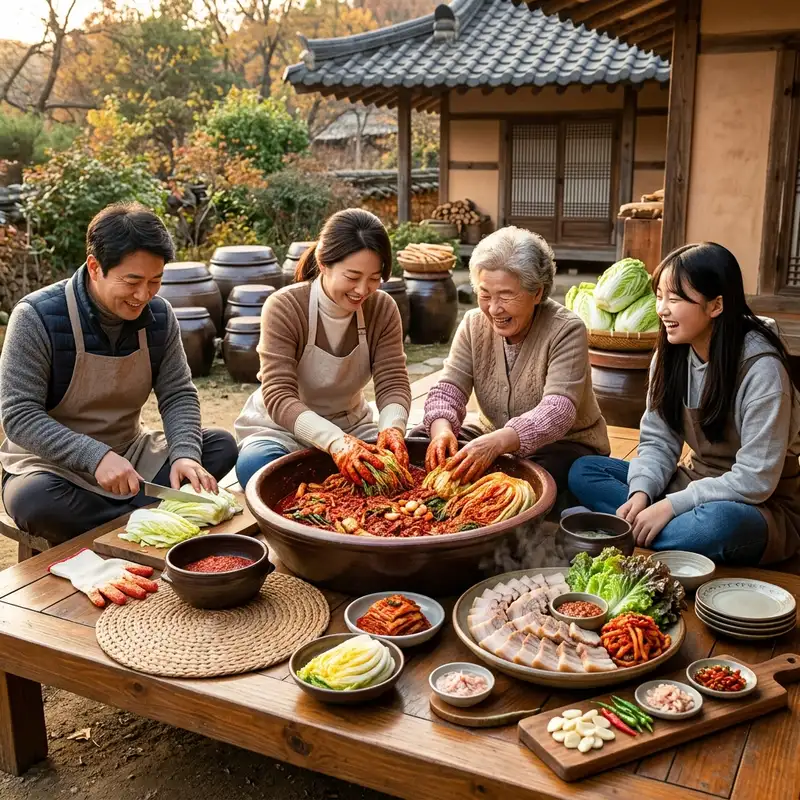
These days, it is easy to find 'Kimchi' in supermarkets across the Western world. With a growing interest in health and well-being, Korea's unique fermented food has gained immense popularity for its abundant lactic acid bacteria and immune-boosting effects. While it has established itself as a global health food, to Koreans, Kimchi represents something much deeper: the bond of family.
Kimjang: The Winter Gathering of Family
- A unique Korean culture of gathering the whole family to make Kimchi for the year
- A collaborative process of trimming and salting cabbages and radishes
- Eating Bossam (boiled pork) together after the hard work is the highlight
In my childhood memories, the Kimjang (Kimchi-making) season always felt like a lively family festival. As the chilly winds of early winter began to blow, our family would gather in the living room under my mother's direction. We started by trimming mountains of cabbages and radishes, then salting them. It was backbreaking work, but mixing the red pepper flakes and various seasonings while chatting together brought a strange, energetic vibe to the house.
The moment I waited for the most was when the Kimjang was almost finished. I can still vividly remember the taste of the freshly mixed, spicy Kimchi wrapped around tender boiled pork (Bossam) that my mother would put in my mouth. That single bite, eaten together with the whole family after a long day of hard work, was a warm comfort that assured us we were ready to face the cold winter.
> [!NOTE] > **Kimjang (김장)**: In 2013, the culture of making and sharing Kimchi in the Republic of Korea was inscribed on the UNESCO Representative List of the Intangible Cultural Heritage of Humanity, recognizing its role in fostering community spirit and sharing.The Science of Fermentation and Immunity
- Abundant plant-based lactic acid bacteria created through fermentation
- Rich in vitamins, minerals, and dietary fiber, aiding gut health and immunity
- The harmony of taste and nutrition that deepens over time
The biggest reason Western countries are paying attention to Kimchi recently is the 'science of fermentation'. The plant-based probiotics generated as Kimchi ferments are excellent for increasing beneficial gut bacteria and boosting immunity. It offers a healthy charm that is distinct from Western fermented foods like cheese or yogurt.
Describing Kimchi merely as a 'healthy food' doesn't do it justice. As time passes, the probiotics multiply, creating a tangy, umami flavor. The way it transforms into various dishes like stews or fried rice is truly fascinating. For those seeking well-being foods, Kimchi is a wonderful choice that satisfies both taste and nutrition.
The Kimchi Refrigerator: Preserving the Taste of Fermentation
- An essential home appliance in Korea designed exclusively for storing Kimchi
- Scientifically replicating the constant temperature of underground clay pots in mid-winter
- Keeping probiotics in optimal condition to provide a crisp taste all year round
When Westerners visit a Korean kitchen, there is one appliance they find most fascinating: the 'Kimchi Refrigerator'. Koreans' love for Kimchi is so extraordinary that having a separate refrigerator just for Kimchi is a must for almost every household. I recently spent a quite large amount to replace my parents' old Kimchi refrigerator with the latest model, and they were overjoyed, saying, "Without this, the Kimchi gets too sour to eat."
In the past, our ancestors would dig deep into the ground during the middle of winter to bury large clay pots (Onggi) and store Kimchi inside. It was a wisdom to ferment it slowly in the constant temperature underground, keeping the probiotics alive and the cabbage crisp. The modern Kimchi refrigerator is a machine that scientifically replicates this exact 'underground temperature'. While a regular refrigerator's temperature fluctuates every time the door opens, a Kimchi refrigerator strictly maintains a constant temperature near -1 degree Celsius. Thanks to this, we can enjoy the fresh, crisp taste and abundant probiotics of the Kimchi exactly as it was on the day of the first snow when we made it, all year round.
Secret Ingredients in Every Home: The Umami of Seafood
- Secret ingredients that vary wildly depending on the region and family tradition
- The deep umami flavor exuded by fresh seafood like raw oysters, shrimp, and salted fish
- A mother's touch acting as the unique Kimchi brand for each family
Another charm of Kimchi is that even when made with the same cabbage, the taste differs completely from house to house. My mother is from the southern region of Korea (Namdo), so she always adds plenty of fresh raw oysters and anchovy fish sauce during Kimjang. Picking out the cold, ocean-scented oysters from the freshly mixed cabbage leaves was the biggest privilege given to me as I ran errands next to her on Kimjang day.
To foreigners, adding loads of raw seafood or salted fish to fermenting vegetables might seem a bit unfamiliar. However, the proteins in this seafood slowly ferment over a long time, breaking down into amino acids, which mix with the cabbage juices to create an explosive, mouthwatering umami. This is exactly where the deep, complex flavor that coats your tongue—rather than just a simple spicy taste—comes from. If you ask a Korean, "Whose house has the most delicious Kimchi?", nine out of ten will answer, "The Kimchi my mother makes." It's precisely because each batch melts with their family's deep affection and unique secret recipe.
The warm affection of family mixed into the spicy seasoning, and the wisdom of fermentation recognized worldwide. How about enjoying a warm meal with a healthy plate of Kimchi tonight?
Practical Guide to Korean Kimchi for Tourists
Kimchi is an excellent health food, but there are a few tips foreign tourists should know when buying or tasting it.
- Warning on Carrying Kimchi on Airplanes (Checked Baggage Only): This is the most important thing to watch out for when buying Kimchi before leaving Korea. Because Kimchi is classified as a liquid or gel, carrying more than 100ml of Kimchi in your carry-on is strictly prohibited. It is very common for Kimchi to be confiscated at airport security checkpoints. Therefore, any Kimchi purchased outside must be packed in your checked baggage. Also, because the air pressure difference during the flight can cause bags to burst, be sure to double-bag and seal it tightly, or buy specially designed 'canned/vacuum-packed Kimchi for travel'. (However, Kimchi purchased inside the airport duty-free shop after passing through security can be carried on board even if it exceeds 100ml.)
- Not All Kimchi is Spicy: While the red, chili powder-seasoned cabbage Kimchi is the most famous, there are plenty of alternatives for those who cannot eat spicy food. Be sure to try 'Baek-kimchi' (White Kimchi), which is made without chili powder and is cool and crisp, or 'Dongchimi', a clear radish water Kimchi.
- Kimchi for Vegans: Traditional Korean Kimchi essentially contains seafood like salted shrimp or anchovy fish sauce for a deep umami flavor. However, recently, 'Vegan Kimchi' made with fruit or vegetable broth instead of salted fish is easily available at large supermarkets (such as E-mart or Lotte Mart) for vegetarians. Look for the 'Vegan' label when purchasing.
Bridging K-Pop & K-Dramas: Why IU is the Ultimate Icon of Korean Emotion
Explore how IU bridges music and acting to become the definitive voice of modern Korean empathy and storytelling.
📌 Recommended Related Posts
이 리뷰를 한국어로 읽고 싶으신가요?
🇰🇷 한국어 리뷰 읽기