Why Korea's Night Street Safety and Transit Rank Among the World's Best
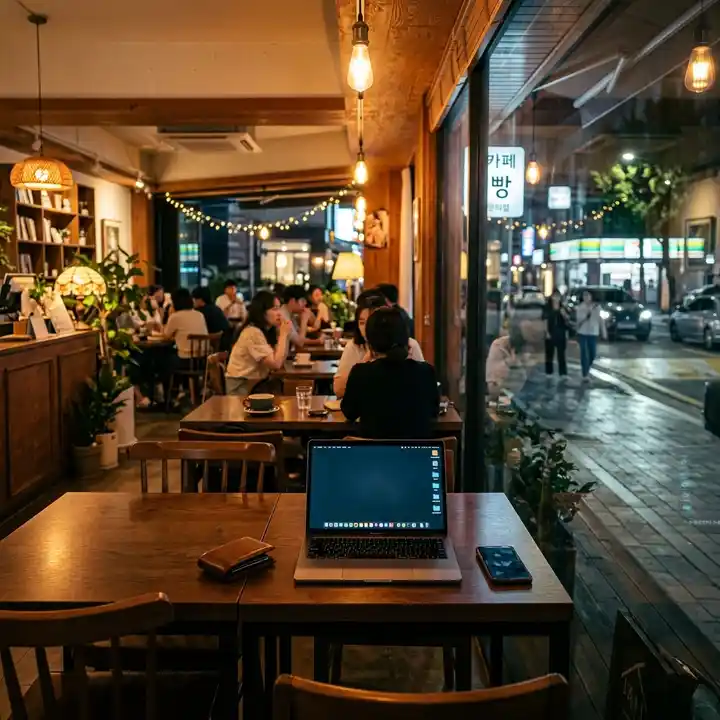
1. A Stranger's Gaze Meets Korean Daily Life and Its Real-World Shock
The first thing that throws travelers visiting Korea for the first time isn't the dazzling tourist attractions.
It's the faces of passengers dozing on Seoul Subway Line 2 at eleven at night, casually clutching expensive smartphones. It's the nonchalance of students eating instant noodles outside a convenience store at one in the morning. It's the indifferent stride of someone walking away to the restroom, leaving a laptop and wallet right there on a cafe table.
These scenes explode in popularity on overseas YouTube travel channels every time. The comments are a tense mix of disbelief and suspicion that it must be staged.
But for those of us born and raised in Korea, these scenes are nothing more than daily life, as natural as breathing. And that very numbness, that sense that there's nothing special here, is the single most important key to understanding Korean society.
It proves that safety and convenience have settled in as firm defaults for all citizens. Yet it's hard to find anyone explaining what infrastructure and historical costs went into building these seemingly obvious defaults. Most people only see the fascinating result right in front of them, easily overlooking the structural background behind it.
2. Late-Night Safety and Public Infrastructure as Experienced Firsthand
I've lived my daily life commuting between Seoul, Gyeonggi, and Incheon for over twenty years.
At the deep hours of early morning, I'd have a glass of soju or beer and fried chicken with friends in the alleys of Gangnam Station, then run hard through the night to catch the last bus or subway before it left. But even late at night, I never had to stamp my feet in fear. I could check real-time locations through apps on my smartphone, track late-night buses through the real-time arrival displays at every stop, and there were plenty of taxis, so if I was in a hurry, I'd just take one home. Sometimes I'd doze off on the bus from exhaustion and end up riding all the way to the last stop, but even that has become a fond memory now.
Even when I turn into a dark residential alley on my way home, the bright streetlights never break, lighting the path the whole way. The security CCTVs blinking in every alley aren't just decoration.
This surveillance network is connected in real time to each local government's smart city integrated control center, where professional operators are watching, and if an incident occurs, police arrive on the scene within three minutes. With that trust, I walk home with a completely easy mind, never worrying about safety. This applies not just in the city but almost anywhere in Korea, unless you're in a remote rural area.
The 24-hour convenience stores lighting up every street corner also serve as reliable safety assistants in daily life. Convenience stores are equipped with emergency bell systems and high-definition multi-angle cameras, so even late at night, you can walk in with peace of mind and catch your breath over a warm canned coffee or a simple cup of instant noodles.
With subways equipped with world-class platform screen doors, a transfer discount system that connects seamlessly regardless of distance, and heating and cooling that run on schedule even in the peak of summer and winter, safety has become for Koreans not a conscious tension but an ordinary habit of life.
3. The Social and Cultural Background That Makes Trust in Personal Belongings and a Rapid System Possible
Explaining the background behind this daily life as simply the result of Koreans' high moral standards is only half the answer.
Behind Korea's violent crime rate ranking at the bottom of the OECD lies a unique set of compressed social conditions shaped by the rapid industrialization and urbanization of the past sixty-odd years.
As the population explosively concentrated into the capital region over a short period, a unique urban space formed in which high-density residential and commercial areas are tightly intertwined within a small area. Paradoxically, having many people also means that the "eyes of citizens" watching the surroundings are present everywhere.
On top of this, the resident registration administrative network that stitches the entire country together, the ultra-precise CCTV control infrastructure expanded nationwide since the 2000s, the 112 emergency dispatch system (Korea's police emergency number equivalent to 911) that responds the moment a report comes in, and police officers arriving at the scene within three minutes, all of these combine powerfully.
Above all, a strict social consensus on the rule of law and a deep-rooted awareness of norms through education are firmly in place. Even a small theft, if caught, carries social costs and stigma too heavy to bear.
Being able to leave a smartphone and an expensive laptop on a cafe table and walk away with peace of mind isn't blind faith. It's because a calculated social trust capital has fully taken root: with so many cameras around and Koreans being so diligent about reporting things, "if you take it, you will definitely get caught, and if you lose it, it will find its way back to you."
4. A Balanced Look at Korean Society Beyond the Shallow Fantasy
That said, Korea should not be packaged as a flawless utopia where no crime ever occurs.
The instinctive wariness that surges when a woman walks alone on an unfamiliar late-night route home, crimes within personal relationships like dating violence and stalking, and new types of crime that have hidden themselves in the digital realm are still the shadows of reality that our society is fiercely fighting against.
No matter how low the national statistics may be, it's never the case that every individual feels 100 percent safe at every moment. The weight of anxiety faced in daily life clearly differs depending on gender, age, and the environment of the area where you live.
Furthermore, the surveillance cameras that tightly encircle the entire city constantly raise the heavy question of privacy infringement. Balancing extreme convenience with individual freedom is a task that modern Korean society must absolutely resolve.
Even so, one thing is certain: the tranquility of the night streets we enjoy today was never a free gift that came by chance.
It's a valuable social outcome cultivated through decades of accumulated public institutional design, enormous taxpayer investment, and the dedication of police officers and infrastructure workers who guard the scene day and night. Before getting swept up in the envious admiration of overseas travelers, we must gaze together at the costs and limitations behind that tranquility to truly understand the real strength of Korean culture.
Practical Guide to Korea's Late-Night Safety & Transit for Tourists
To safely enjoy Korea's nightlife and return to your accommodation without a hitch, here are some essential practical tips every tourist should know:
- Utilizing Owl Buses (N-Buses): Don't panic if the subway stops running after midnight. Seoul operates 'Owl Buses' exclusively late at night. The bus numbers start with an 'N (Night)' (e.g., N13, N26) and usually run from 11:00 PM to 6:00 AM.
- Cashless Buses and T-money Cards: Many buses in Seoul operate as 'Cashless Buses' and no longer accept cash. At the start of your trip, make sure to purchase and charge a T-money transportation card at a convenience store or subway station.
- Use 'Naver Map' or 'KakaoMap' Instead of Google Maps: Due to national security reasons, Google Maps' walking and public transit navigation are not accurate in Korea. You must download the Naver Map or KakaoMap app (both offer full English support) to check real-time late-night bus locations and accurate arrival intervals.
- Emergency Contacts: No matter how safe Korea is, it's best to avoid deserted, dark alleys. If you feel threatened or need help, call 112 for the police and 119 for fire and medical emergencies. If you face a language barrier, call 1330, the 24-hour multilingual tourist interpretation service, for immediate assistance.
The Dual Engines of Korean Pop Culture: Decoding 'Han' (한) and 'Heung' (흥)
Discover how historic sorrow ('Han') and explosive joy ('Heung') fuel iconic K-drama revenge plots and electrifying K-Pop performances.
📌 Recommended Related Posts
이 리뷰를 한국어로 읽고 싶으신가요?
🇰🇷 한국어 리뷰 읽기